

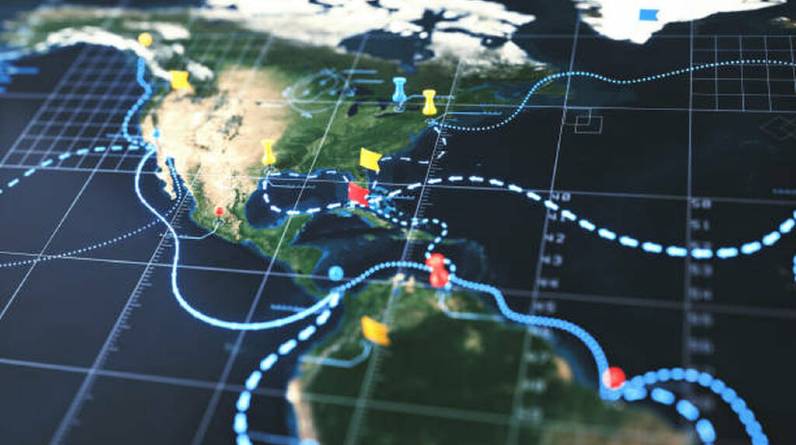
Jr Geo is no longer confined to a single definition. It has evolved into a multi-layered concept that connects education, real-time geospatial intelligence, and lifestyle-driven exploration. From introducing children to Earth sciences, to powering smart cities with live location data, to inspiring everyday people to explore maps creatively, Jr Geo represents a new way of understanding the world through location.
This article explores Jr Geo from a fresh, unified perspective: not as a tool, program, or buzzword, but as a continuum of geographic awareness that grows with the user, from curiosity to capability.
What Exactly Is Jr Geo? A Unified Definition
Jr Geo can be best understood as a progressive geography ecosystem rather than a single platform.
At its core, Jr Geo blends three dimensions: exploration-first learning, real-time and historical geospatial intelligence, and lifestyle-based digital map interaction and storytelling.
Instead of treating geography as static knowledge, Jr Geo treats it as a living system that people interact with visually, physically, and digitally.
The Jr Geo Continuum: From Learning to Living Geography
Most discussions treat Jr Geo as either educational or technical. A more accurate view is to see it as a journey with three overlapping stages.
Stage 1: Jr Geo as Curiosity-Led Learning
At its foundation, Jr Geo begins with accessible Earth science education.
Children and beginners explore rocks, soil, landforms, ecosystems, weather patterns, and environmental changes through hands-on and visual experiences.
Rather than memorization, Jr Geo emphasizes observation, questioning, and exploration-based understanding.
For example, a student might map soil types around their neighborhood and connect them to plant growth patterns instead of only reading about soil in a textbook.
Stage 2: Jr Geo as Real-Time Geographic Intelligence
As curiosity deepens, Jr Geo expands into live, data-driven geography.
This layer combines historical geospatial journaling with real-time signals, creating a four-dimensional understanding of location and time.
Technologies involved include GPS systems, satellite imagery, IoT sensors, artificial intelligence, and digital twins of cities and environments.
A practical example is a city using Jr Geo-driven systems to adjust traffic signals dynamically based on live congestion rather than fixed schedules.
Stage 3: Jr Geo as a Lifestyle and Exploration Mindset
The most recent evolution of Jr Geo integrates geography into everyday life.
People use maps to plan travel, explore terrain before hikes, understand environmental change, and tell stories through location-based content.
In this stage, Jr Geo becomes part of how people think, create, and make decisions.
A travel blogger, for instance, might compare satellite images of coastal regions over time to explain erosion trends while promoting responsible tourism.
How Jr Geo Works: A Practical Breakdown
Jr Geo functions through the interaction of data, technology, and human curiosity.
Core Components of the Jr Geo System
Data is collected from GPS satellites, mobile devices, IoT sensors, satellite imagery, and user-generated geotagged content.
Artificial intelligence processes this information through pattern recognition, predictive analytics, and anomaly detection.
Users interact with the insights through interactive maps, dashboards, augmented reality experiences, and visual storytelling.
Jr Geo vs Traditional Geography
Traditional geography relies heavily on memorization and static materials. Jr Geo shifts the focus to exploration, real-time data, and interactive learning.
| Aspect | Traditional Geography | Jr Geo Approach |
| Learning style | Memorization-based | Exploration-based |
| Data | Static | Real-time and historical |
| Tools | Textbooks and charts | Interactive maps and satellites |
| Engagement | Passive | Active and visual |
| Audience | Mostly students | All age groups |
| Application | Academic | Lifestyle and industry |
Why Jr Geo Matters in a Data-Driven World
Every second, massive amounts of geographic data are generated through weather systems, mobility networks, population movement, and environmental monitoring.
Jr Geo matters because it turns overwhelming location data into understandable, actionable knowledge. It democratizes access to geographic intelligence and builds spatial literacy for non-experts.
This shift is crucial in areas such as climate awareness, urban development, travel behavior, emergency response, and sustainability planning.
Industry Applications Explained Simply
Jr Geo powers complex systems, but its real-world impact is easy to understand.
In smart cities, it enables real-time traffic management, predictive infrastructure maintenance, and efficient public transport tracking.
In logistics and mobility, it improves route planning, last-mile delivery efficiency, and supply chain visibility.
In environmental protection, Jr Geo supports monitoring deforestation, tracking wildfires, visualizing floods, and analyzing climate change patterns over time.
In education and content creation, it enables virtual field trips, gamified learning, and compelling map-based storytelling.
Jr Geo and Ethical Responsibility
The use of geographic intelligence comes with ethical considerations.
Privacy is a key concern, as location data must be anonymized and protected. Bias in algorithms must be actively addressed to prevent unequal resource allocation. Environmental exploration must promote respect and stewardship rather than exploitation.
Responsible Jr Geo systems prioritize transparency, fairness, and sustainability.
The Rise of Geospatial Storytelling
One of the most powerful outcomes of Jr Geo is the growth of geospatial storytelling.
People now share travel routes, environmental observations, urban insights, and personal discoveries through maps and satellite visuals.
This approach makes geography emotionally engaging and easier to understand. It also improves digital visibility, as search engines favor content with high engagement, strong context, and storytelling depth.
How Beginners Can Start with the Jr Geo Mindset
Starting with Jr Geo does not require technical expertise.
Open a digital map platform, switch between satellite and terrain views, observe patterns in roads, rivers, and elevation, and ask simple “why” questions.
Connecting digital observations with real-world exploration gradually builds geographic intuition.
Educational Value Across Age Groups
| Age Group | Jr Geo Learning Focus |
| Children | Map games and exploration missions |
| Teens | Satellite comparisons and geo storytelling |
| Adults | Travel planning and environmental insight |
| Creators | Visual map-based narratives |
| Professionals | Spatial awareness for better decisions |
Jr Geo adapts to the learner rather than forcing rigid academic structures.
The Future of Jr Geo
Jr Geo is expected to expand further through augmented reality exploration, AI-driven environmental forecasting, autonomous systems, and personalized mapping experiences.
It will increasingly act as an invisible layer of intelligence guiding daily decisions, urban planning, and environmental action.
Final Thoughts: Jr Geo as a Way of Seeing the World
Jr Geo transforms geography from a subject into a mindset.
It teaches people to observe patterns, understand space, connect location with impact, and explore responsibly.
Frequently Asked Questions (FAQs)
What is Jr Geo in simple terms?
Jr Geo is a modern approach to geography that blends learning, digital maps, and real-time location data. It helps people understand the world through exploration rather than memorization.
Is Jr Geo only meant for children or students?
No. While Jr Geo began as a youth-focused learning concept, it now applies to all age groups, including travelers, creators, professionals, and everyday curious learners.
Do I need technical or GIS skills to use the Jr Geo approach?
Not at all. Jr Geo is designed for beginners and non-technical users. Anyone can engage with it using common digital map platforms and visual exploration tools.
How is Jr Geo different from traditional geography?
Traditional geography focuses on static facts and memorization. Jr Geo emphasizes real-time data, visual learning, interaction, and real-world relevance.
What industries benefit from Jr Geo concepts?
Jr Geo plays a role in smart cities, logistics, environmental monitoring, education, tourism, content creation, and urban planning by improving spatial awareness and decision-making.
Does Jr Geo involve real-time data and AI?
Yes. Advanced Jr Geo applications combine historical location data with real-time inputs and AI-driven analytics to provide insights and predictions.
How does Jr Geo support environmental awareness?
Jr Geo helps people visualize climate change, land use, disasters, and ecosystem shifts through satellite imagery and interactive maps, making environmental issues easier to understand.
Can adults start learning with Jr Geo from scratch?
Absolutely. Jr Geo is curiosity-driven and self-paced, making it ideal for adults who want to explore geography for travel, sustainability, or personal interest
For more insightful articles and the latest updates, keep visiting Hacoo.